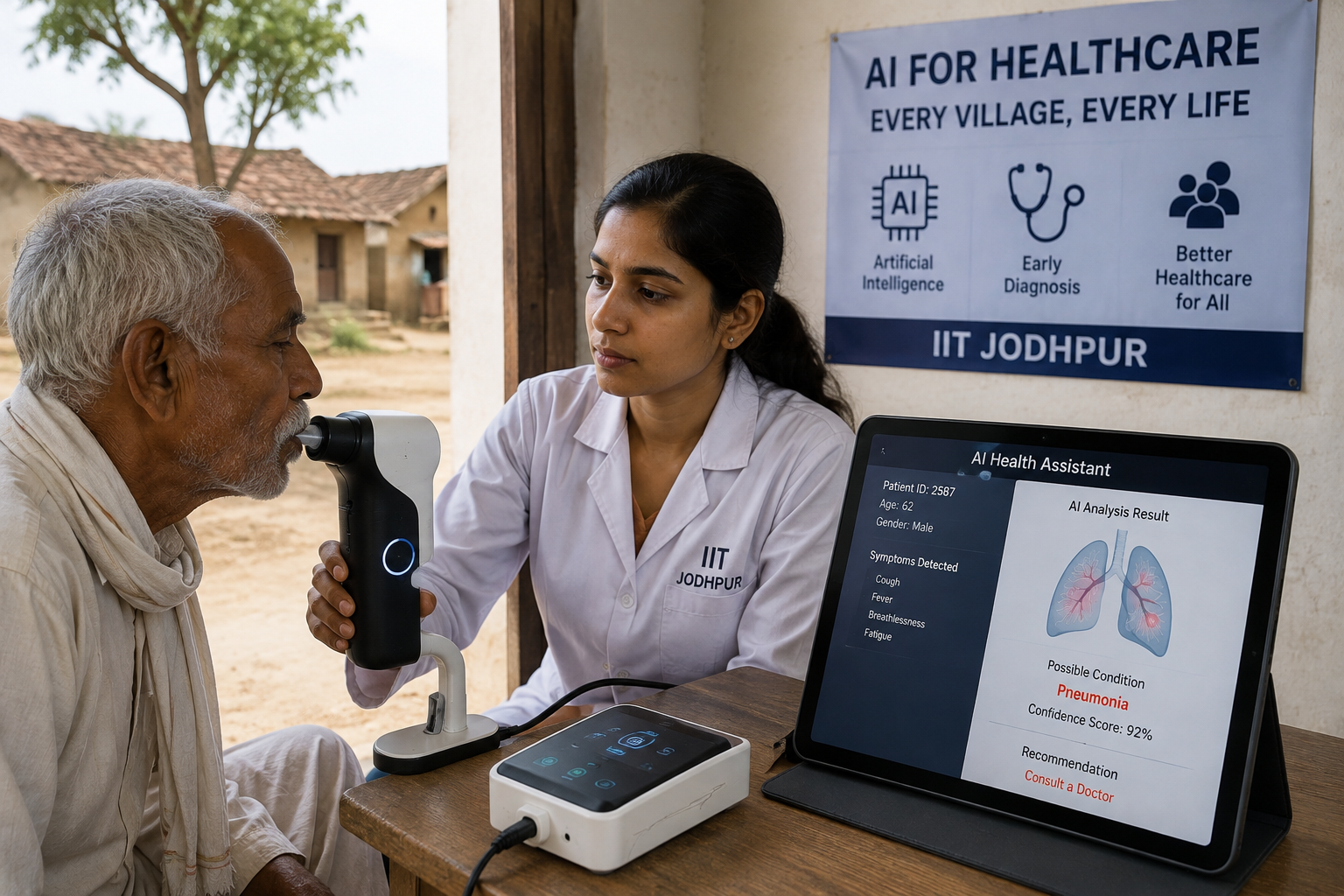
किसी गांव में मरीज को सांस लेने में परेशानी हो, कमजोरी महसूस हो या कोई दूसरा स्वास्थ्य संकेत दिखाई दे, तो पहला सवाल हमेशा यह नहीं होता कि बीमारी क्या है। कई बार उससे पहले सवाल होता है—पास में जांच की सुविधा कहां है, specialist डॉक्टर कब मिलेंगे और अगर internet कमजोर है तो medical information आगे कैसे पहुंचेगी?
इसी वजह से ग्रामीण healthcare के लिए AI की चुनौती किसी बड़े hospital में medical images को analyze करने से अलग है। यहां technology को कम resources, सीमित connectivity और स्थानीय healthcare infrastructure के बीच काम करना पड़ सकता है।
IIT Jodhpur का Software Innovation Lab इसी तरह के real-world deployment पर काम कर रहा है। 20 अगस्त 2026 को Press Information Bureau ने बताया कि lab Artificial Intelligence, software architecture, edge computing और Internet of Things को मिलाकर healthcare, education, public safety और infrastructure के लिए intelligent systems विकसित कर रहा है। Healthcare में इसके काम में portable diagnostic platforms, medical sensor data, patient records और AI-based analysis को जोड़ने की दिशा शामिल है।
लेकिन इसका मतलब यह नहीं है कि गांव में AI एक डॉक्टर की जगह बैठकर हर बीमारी का final diagnosis करने लगेगा। ज्यादा सही तस्वीर यह है कि AI को healthcare worker और doctor की मदद करने वाला digital layer बनाया जाए, जो मरीज से जुड़ी information को जल्दी process करके शुरुआती assessment, monitoring और decision support दे सके।
AI rural healthcare India में सबसे बड़ी समस्या क्या हल कर सकता है?
ग्रामीण healthcare में एक मरीज और specialist medical care के बीच कई स्तरों की दूरी हो सकती है। Primary healthcare facility उपलब्ध हो सकती है, लेकिन हर जगह specialist या advanced diagnostic equipment मौजूद नहीं होता।
ऐसे में एक portable system मरीज से sensor-based information ले सकता है। उदाहरण के लिए wearable sensor से movement या gait की जानकारी, biomedical signals से physiological information या दूसरे medical measurements लिए जा सकते हैं। AI इन signals को process करके healthcare professional को संभावित patterns समझने में मदद कर सकता है।
IIT Jodhpur के Software Innovation Lab के बारे में PIB की जानकारी में portable diagnostic platforms और augmented intervention systems का उल्लेख है। इन systems का उद्देश्य medical sensor data, patient records और AI-based analysis को जोड़कर early diagnosis, patient assessment और continuous monitoring में healthcare professionals की सहायता करना है।
इस approach में AI का सबसे महत्वपूर्ण काम “डॉक्टर बनना” नहीं, बल्कि उपलब्ध medical information को उपयोगी decision support में बदलना है।
Edge AI यहां इतना जरूरी क्यों है?
सामान्य AI application में data को internet के जरिए किसी remote server या cloud तक भेजा जा सकता है। वहां powerful computers analysis करते हैं और result वापस device तक आता है। शहर में तेज internet होने पर यह model आसानी से काम कर सकता है। लेकिन remote village में connectivity लगातार अच्छी हो, यह जरूरी नहीं।
Edge computing इस architecture को बदल देता है। इसमें data processing का कुछ हिस्सा उस device या उसके बहुत करीब मौजूद computing system पर किया जाता है जहां data पैदा हुआ है।
इसे एक आसान उदाहरण से समझिए। अगर कोई health-monitoring device मरीज के vital signals लगातार पढ़ रहा है, तो हर छोटा measurement cloud में भेजने के बजाय जरूरी analysis स्थानीय device पर किया जा सकता है। इससे connectivity पर निर्भरता घट सकती है और response जल्दी मिल सकता है।
IIT Jodhpur का Software Innovation Lab AI, edge computing और IoT को एक साथ लेकर ऐसे systems विकसित करने पर जोर देता है जो resource-constrained environments में भी reliable और deployable हों।
IoT और AI मिलकर मरीज की जानकारी कैसे समझ सकते हैं?
IoT यानी Internet of Things में sensors और connected devices physical world से data collect करते हैं। Healthcare में ये sensors शरीर या मरीज की गतिविधियों से जुड़े अलग-अलग signals capture कर सकते हैं।
AIoT यानी Artificial Intelligence of Things इसी sensor data पर intelligence की layer जोड़ता है। IIT Jodhpur की AIoT initiative में sensor technologies, embedded systems, signal processing, communication protocols और machine learning को मिलाकर end-to-end systems विकसित करने का लक्ष्य बताया गया है। Healthcare इसके प्रमुख application areas में शामिल है।
उदाहरण के लिए किसी wearable device से gait यानी चलने के pattern का data लगातार मिल सकता है। Machine-learning model उस data में unusual patterns खोज सकता है। यह डॉक्टर को संभावित समस्या की तरफ ध्यान दिलाने वाला signal बन सकता है, जिसे आगे clinical assessment से verify किया जाए।
IIT Jodhpur ने अपने Software Innovation Lab के healthcare applications में wearable IMU systems के जरिए gait analysis और AI-based biomedical signal processing का उल्लेख किया है।
क्या AI गांव में बीमारी की पहचान खुद कर देगा?
यहां एक जरूरी फर्क समझना चाहिए। AI किसी medical signal में ऐसा pattern पहचान सकता है जो किसी बीमारी या health condition से जुड़ा हो, लेकिन इसका मतलब यह नहीं कि AI हर मरीज के लिए स्वतंत्र और अंतिम diagnosis दे देगा।
Medical diagnosis में patient history, physical examination, laboratory tests, imaging और clinical judgment जैसे कई factors शामिल होते हैं। AI इनमें से कुछ information को analyze करके healthcare professional की मदद कर सकता है।
इसलिए IIT Jodhpur के current approach को AI-assisted healthcare कहना ज्यादा सही है। PIB के अनुसार lab के portable diagnostic systems healthcare professionals को early diagnosis, patient assessment और continuous monitoring में support करने के लिए बनाए जा रहे हैं।
भविष्य में ऐसे systems किसी गांव के healthcare worker को यह संकेत दे सकते हैं कि किस मरीज को तुरंत attention चाहिए और किस मरीज को routine monitoring या आगे की जांच की जरूरत हो सकती है। Final clinical decision फिर भी trained medical professional और applicable medical protocols के आधार पर होना चाहिए।
कम internet में healthcare system कैसे चल सकता है?
यह समस्या सिर्फ internet की speed की नहीं, architecture की है। अगर पूरा healthcare application cloud पर निर्भर हो, तो network interruption होने पर उसका महत्वपूर्ण हिस्सा काम करना बंद कर सकता है।
Edge-based architecture में AI model या उसका आवश्यक हिस्सा local computing hardware पर रखा जा सकता है। Sensor data पहले local system में process हो सकता है और internet उपलब्ध होने पर selected information, reports या updates central system के साथ synchronize की जा सकती हैं।
इस तरह connectivity को “हर समय जरूरी” infrastructure के बजाय “जहां उपलब्ध हो, वहां synchronization के लिए उपयोगी” layer बनाया जा सकता है। IIT Jodhpur का Software Innovation Lab practical constraints में dependable systems बनाने पर इसी तरह जोर देता है।
हालांकि किसी specific IIT Jodhpur healthcare prototype के लिए यह दावा करना सही नहीं होगा कि वह पूरी तरह offline diagnosis करता है, क्योंकि सार्वजनिक जानकारी में सभी individual systems की detailed deployment architecture उपलब्ध नहीं है। इसलिए यहां edge computing को broader technology approach के रूप में समझना बेहतर है।
Portable diagnostic platform का फायदा क्या होगा?
बड़ी diagnostic machine को हर गांव में लगाना महंगा और infrastructure-intensive हो सकता है। इसके विपरीत portable diagnostic platform को मरीज के पास ले जाने की संभावना ज्यादा होती है।
अगर ऐसे device में sensor data acquisition, local processing और AI-based analysis एक साथ integrate हो जाएं, तो healthcare worker को प्रारंभिक assessment के लिए ज्यादा information मिल सकती है। इससे किसी मरीज को सिर्फ basic assessment के बाद दूर के hospital भेजने और किसी urgent case को समय पर escalate करने के बीच बेहतर फर्क किया जा सकता है।
IIT Jodhpur के अनुसार उसके healthcare systems का focus affordable, reliable और low-resource settings में usable technology पर है। Lab medical institutions और Ayurvedic hospitals के साथ practical healthcare requirements के आधार पर भी collaboration करता है।
Remote monitoring में AI की भूमिका क्या होगी?
हर मरीज को हर समय hospital में रखना संभव नहीं है। कुछ health conditions में लगातार monitoring उपयोगी हो सकती है, लेकिन patient घर या गांव में रह सकता है।
Wearable sensors या portable devices से समय के साथ data collect किया जा सकता है। AI उस data में बदलाव या unusual patterns को flag कर सकता है। इससे healthcare worker को उन मरीजों की पहचान करने में मदद मिल सकती है जिन्हें दोबारा assessment की जरूरत है।
इस model की खासियत यह है कि healthcare delivery केवल “मरीज अस्पताल आया या नहीं” पर निर्भर नहीं रहती। Technology मरीज के आसपास data collection और monitoring का layer जोड़ सकती है। IIT Jodhpur ने AI-based biomedical signal processing और wearable IMU-based gait analysis को इसी broader healthcare research के हिस्से के रूप में सूचीबद्ध किया है।
AI rural healthcare में सबसे बड़ा फायदा क्या दे सकता है?
इसका सबसे बड़ा फायदा शायद डॉक्टर की जगह लेना नहीं, बल्कि medical attention की पहुंच और timing सुधारना हो सकता है।
अगर किसी remote area में healthcare worker के पास portable sensor और AI-assisted analysis उपलब्ध हो, तो वह मरीज के बारे में अधिक structured information collect कर सकता है। जरूरत पड़ने पर यही information specialist तक भेजी जा सकती है। इससे consultation अधिक data-rich हो सकती है।
दूसरा फायदा continuous monitoring है। एक single visit की बजाय समय के साथ collected measurements में बदलाव देखा जा सकता है। तीसरा फायदा resource prioritisation हो सकता है—limited medical resources को उन cases पर केंद्रित करना जहां ज्यादा attention की जरूरत दिखाई दे।
क्या यह technology सिर्फ गांवों के लिए है?
नहीं। Low-connectivity deployment इसका एक महत्वपूर्ण use case है, लेकिन edge AI और AIoT का उपयोग शहरों में भी हो सकता है। Portable diagnostics, remote monitoring, emergency response, industrial health monitoring और home healthcare जैसे applications में local intelligence उपयोगी हो सकती है।
IIT Jodhpur का Software Innovation Lab healthcare के साथ education, public safety और structural health monitoring पर भी काम करता है। इसकी AIoT initiative agriculture, infrastructure, energy, environment और water management तक applications की बात करती है।
इससे स्पष्ट है कि यहां विकसित हो रही approach किसी एक medical device तक सीमित नहीं है। यह sensor, computing और AI को वास्तविक physical environments में जोड़ने की broader engineering philosophy है।
IIT Jodhpur का Digital Health ecosystem कितना बड़ा है?
IIT Jodhpur में healthcare innovation केवल एक software lab तक सीमित नहीं है। Institute का Centre for Digital Health affordable digital healthcare को physical infrastructure और human resources में समान अनुपात की वृद्धि के बिना अधिक लोगों तक पहुंचाने की दिशा में काम करता है। इसके research areas में AI, Big Data, IoT, wearables, imaging, robotics, computational biology, cloud computing और communication technologies शामिल हैं।
Institute के AI-based Precision Healthcare ecosystem में population और individual risk stratification तथा early precision health interventions पर भी काम किया जा रहा है।
इसके अलावा IIT Jodhpur के Technology Innovation and Start-up Center के portfolio में rural telemedicine, smart monitoring और early intervention जैसे healthcare ventures भी शामिल हैं।
सबसे बड़ी चुनौती: AI की accuracy से ज्यादा deployment
Healthcare AI में laboratory accuracy महत्वपूर्ण है, लेकिन गांव में technology सफल होने के लिए कई दूसरी चीजें भी जरूरी हैं। Device सस्ता होना चाहिए, चलाना आसान होना चाहिए, maintenance संभव होना चाहिए और healthcare worker को उसके output पर भरोसा होना चाहिए।
Data privacy भी महत्वपूर्ण है। Patient records और biomedical signals संवेदनशील information हैं। यदि data local device पर process होता है तो privacy के कुछ फायदे हो सकते हैं, लेकिन device security, access control और secure communication की जरूरत फिर भी बनी रहती है।
एक और चुनौती data diversity है। अलग-अलग उम्र, शरीर, भाषा, lifestyle और health conditions वाले लोगों के data पर trained model का performance अलग हो सकता है। इसलिए किसी AI system को व्यापक clinical deployment से पहले diverse populations और real-world conditions में validate करना जरूरी होगा।
क्या AI डॉक्टरों की कमी पूरी कर देगा?
नहीं, कम से कम मौजूदा technology को इस तरह देखना सही नहीं है। AI healthcare workforce का substitute बनने के बजाय उसकी क्षमता बढ़ाने वाला tool बन सकता है।
एक trained healthcare worker अगर AI-assisted device से अधिक structured information collect कर सके, तो specialist तक referral बेहतर तरीके से किया जा सकता है। इसी तरह remote monitoring से डॉक्टर को उन patients पर ध्यान केंद्रित करने में मदद मिल सकती है जिनमें intervention की ज्यादा जरूरत है।
असल लक्ष्य “AI Doctor” बनाना नहीं बल्कि AI-enabled healthcare network बनाना ज्यादा व्यावहारिक है—जहां sensors data लेते हैं, edge systems उसे locally process करते हैं, AI patterns पहचानता है और medical professionals clinical decisions लेते हैं।
आगे यह technology कहां जा सकती है?
अगर portable diagnostics, edge computing और AIoT systems पर्याप्त विश्वसनीय साबित होते हैं, तो इनका इस्तेमाल primary healthcare से आगे बढ़ सकता है। Remote monitoring, chronic disease management, preventive screening और emergency triage जैसे क्षेत्रों में ऐसे systems उपयोगी हो सकते हैं।
IIT Jodhpur का research ecosystem healthcare के अलावा low-connectivity education और intelligent infrastructure monitoring पर भी इसी deployment philosophy को लागू करने की कोशिश कर रहा है। PIB के अनुसार lab का उद्देश्य ऐसे complete software systems बनाना है जो algorithms से आगे जाकर practical constraints में reliable और scalable तरीके से काम कर सकें।
भारत जैसे देश में यही हिस्सा महत्वपूर्ण है। AI model बनाना एक उपलब्धि है, लेकिन उसे ऐसी जगह चलाना जहां internet कमजोर हो, hardware सीमित हो और trained personnel कम हों—यह अलग engineering challenge है।
आखिर में
AI rural healthcare India के लिए सबसे उपयोगी दिशा शायद वह नहीं होगी जिसमें मशीन सीधे डॉक्टर की भूमिका ले। ज्यादा व्यावहारिक रास्ता ऐसा healthcare system बनाना है जिसमें AI, sensors, edge computing और human medical expertise एक साथ काम करें।
IIT Jodhpur का Software Innovation Lab इसी architecture पर काम कर रहा है। Portable diagnostic platforms medical sensor data और AI analysis को मरीज के करीब लाने की कोशिश करते हैं, जबकि AIoT research sensors, embedded systems, communication और machine learning को एक end-to-end system में जोड़ता है।
अभी उपलब्ध सार्वजनिक जानकारी के आधार पर इसे ऐसा तैयार AI doctor कहना सही नहीं होगा जो गांव में हर बीमारी खुद पहचान ले। लेकिन technology की दिशा महत्वपूर्ण है। अगर AI को कम connectivity और limited resources वाले environment में भी dependable बनाया जा सके, तो healthcare की पहुंच सिर्फ बड़े शहरों और बड़े hospitals तक सीमित रखने की मजबूरी कम हो सकती है।
भविष्य का rural healthcare शायद ऐसा हो जहां गांव का healthcare worker मरीज के पास मौजूद sensor से data ले, स्थानीय device उसका शुरुआती analysis करे और जरूरत पड़ने पर specialist तक structured information पहुंचे। इस model में AI डॉक्टर की जगह नहीं लेता—वह डॉक्टर की विशेषज्ञता को उस मरीज तक पहुंचाने का एक नया रास्ता बन सकता है।
FAQ
क्या AI गांव में डॉक्टर की जगह ले सकता है?
मौजूदा IIT Jodhpur research को डॉक्टर के replacement के रूप में नहीं देखा जाना चाहिए। इसका उद्देश्य healthcare professionals को early diagnosis, patient assessment और monitoring में AI-based support देना है।
IIT Jodhpur की AI healthcare technology क्या है?
IIT Jodhpur का Software Innovation Lab AI, edge computing, IoT और software architecture को जोड़कर portable diagnostic platforms और intelligent healthcare systems विकसित कर रहा है। इनका लक्ष्य low-resource environments में healthcare professionals की सहायता करना है।
Edge AI rural healthcare के लिए क्यों जरूरी है?
Edge computing data processing को data source के करीब ला सकता है। इससे हर analysis के लिए लगातार cloud connectivity पर निर्भरता कम की जा सकती है, जो low-connectivity क्षेत्रों में उपयोगी हो सकती है।
AI मरीज की बीमारी कैसे पहचान सकता है?
AI medical sensors, biomedical signals या दूसरे patient data में patterns पहचान सकता है। लेकिन किसी बीमारी का final diagnosis केवल AI output के आधार पर नहीं होना चाहिए; clinical evaluation और trained healthcare professional की भूमिका जरूरी रहती है।
IIT Jodhpur healthcare में कौन-से AI applications पर काम कर रहा है?
Software Innovation Lab की सार्वजनिक जानकारी में portable diagnostics, biomedical signal processing, wearable IMU-based gait analysis और voice-based Prakriti prediction जैसे applications का उल्लेख है।
क्या यह technology बिना internet के चल सकती है?
Edge computing architecture low-connectivity environments के लिए उपयोगी हो सकता है, लेकिन IIT Jodhpur के प्रत्येक healthcare system को पूरी तरह offline बताना उपलब्ध सार्वजनिक जानकारी से उचित नहीं है। किसी specific deployment में local processing और connectivity की भूमिका अलग हो सकती है।