पानी साफ दिखाई दे, इसका मतलब यह नहीं कि वह रासायनिक रूप से भी सुरक्षित है। Arsenic, lead, chromium या fluoride जैसे contaminants कई बार पानी में इतनी कम मात्रा में मौजूद होते हैं कि उन्हें आंखों से देखना संभव नहीं होता। उनकी जांच के लिए आमतौर पर laboratory instruments और trained personnel की जरूरत पड़ सकती है।
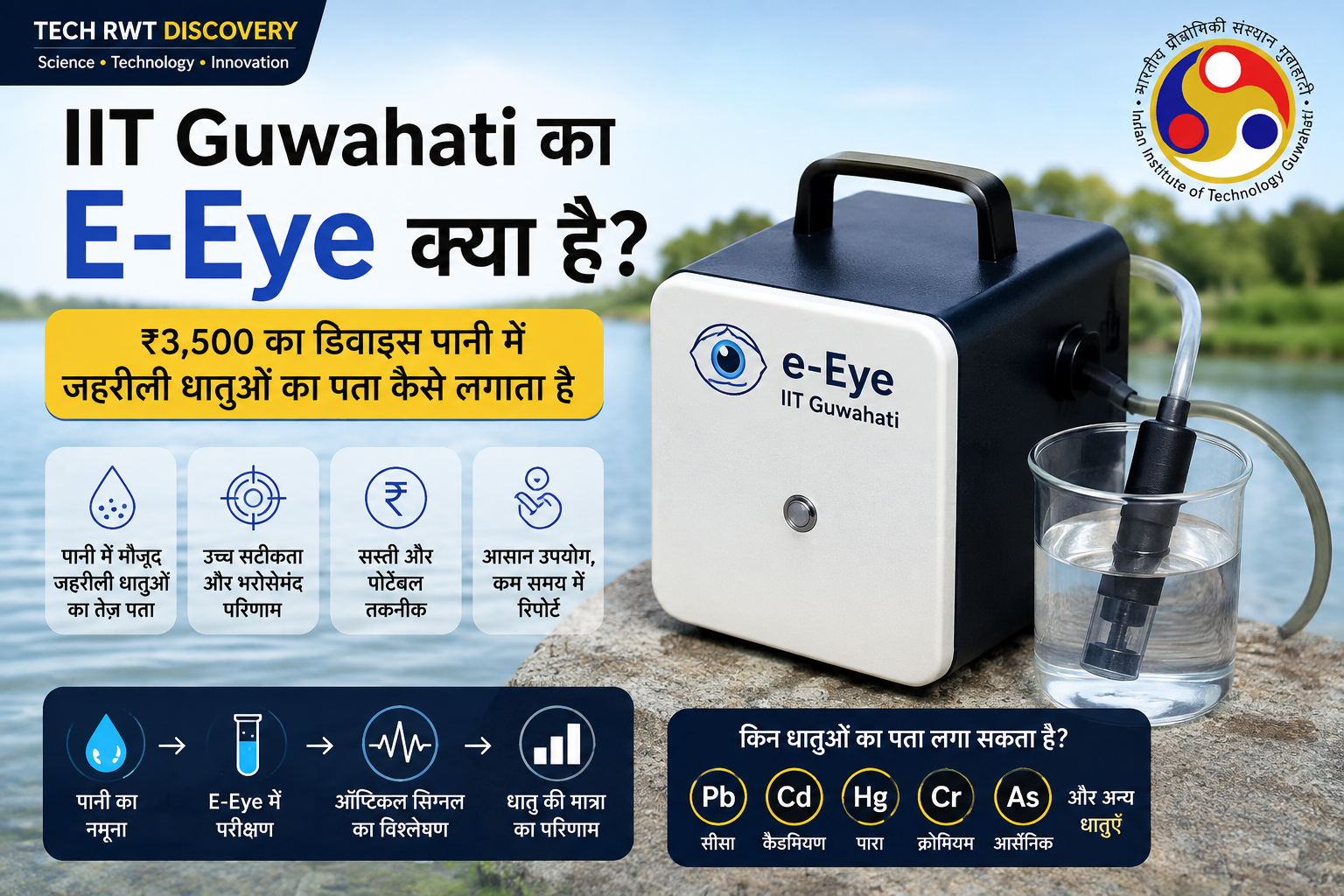
इसी चुनौती को कम करने की कोशिश करता है IIT Guwahati का E-Eye—एक छोटा portable optical sensor, जिसे पानी के अलावा food, soil और biological samples में भी toxic substances की जांच के लिए विकसित किया गया है। इसका नाम “Electronic Eye” से आया है, क्योंकि यह इंसानी आंख की तरह रंग में बदलाव को देखने के बजाय light sensor की मदद से उस बदलाव को digitally मापता है।
हाल की रिपोर्टों के अनुसार device की reported लागत करीब ₹3,500 है और प्रति sample testing cost लगभग ₹2 बताई गई है। Research में इसके results को UV-Visible spectroscopy और Atomic Absorption Spectrometry जैसी established laboratory techniques से compare भी किया गया है। (expresshealthcare.in)
IIT Guwahati E-Eye क्या है?
E-Eye एक portable colorimetric optical sensing device है। इसका मूल विचार काफी सीधा है: किसी खास contaminant को target करने वाला chemical reagent sample के साथ reaction करता है और उस reaction के कारण solution के रंग या उसके light absorption में बदलाव आता है। Device उस optical change को electronic signal में बदलकर concentration का अनुमान निकालता है।
इसमें मुख्य hardware components में LED, Light Dependent Resistor (LDR), microcontroller और display शामिल हैं। Research papers के अनुसार LED और LDR को एक-दूसरे के सामने रखा जाता है, जबकि sample/reaction mixture इनके बीच optical path में रहता है। (sciencedirect.com)
यानी यह कोई ऐसी मशीन नहीं है जो पानी को बिना किसी chemical preparation के “स्कैन” करके हर contaminant पहचान लेती है। अलग-अलग target के लिए selective chemical reaction और sample preparation महत्वपूर्ण हिस्सा हैं।
₹3,500 का water testing device इतना छोटा कैसे हो सकता है?
Laboratory में water analysis के लिए इस्तेमाल होने वाले instruments काफी complex हो सकते हैं। उदाहरण के लिए UV-Visible spectrometer किसी sample के अलग-अलग wavelengths पर light absorption को माप सकता है, जबकि Atomic Absorption Spectrometer trace-level metals की जांच के लिए इस्तेमाल किया जाता है। IIT Guwahati की Environmental Engineering Laboratory में ऐसे advanced instruments उपलब्ध हैं। (iitg.ac.in)
E-Eye इसी optical principle का एक simplified और targeted version इस्तेमाल करता है। इसे हर wavelength का पूरा spectrum record करने की जरूरत नहीं होती। जिस analyte के लिए reaction चुना गया है, उसके लिए उपयोगी wavelength region पर LED और photodetector आधारित measurement किया जा सकता है। इससे hardware छोटा, कम महंगा और portable बनाया जा सकता है।
यही low-cost architecture इस innovation की खासियत है। लेकिन कम कीमत का अर्थ यह नहीं कि device हर laboratory instrument का पूर्ण replacement है। E-Eye का सबसे उपयोगी क्षेत्र rapid और on-site screening या targeted quantification हो सकता है, जबकि complex samples और regulatory confirmation के लिए advanced laboratory analysis अभी भी जरूरी हो सकता है।
E-Eye कैसे काम करता है?
इसके काम करने को चार चरणों में समझा जा सकता है।
1. पानी का sample तैयार किया जाता है
सबसे पहले sample को उस contaminant की detection chemistry के लिए तैयार किया जाता है जिसे मापना है। कुछ मामलों में target substance को aqueous phase में लाने के लिए preprocessing की जरूरत होती है। 2025 में प्रकाशित E-Eye protocol में environmental, biological और food samples के लिए ऐसी preprocessing और selective reactions का वर्णन किया गया है। (jove.com)
2. Target chemical reaction कराई जाती है
इसके बाद sample में एक specific reagent डाला जाता है। इसे “lock-and-key” जैसी selectivity के रूप में समझ सकते हैं। सही contaminant मौजूद होने पर reaction एक खास optical change पैदा करती है। अलग-अलग contaminants के लिए chemistry अलग हो सकती है।
3. LED sample पर light डालता है
LED एक निर्धारित wavelength की light sample के through भेजता है। अगर solution में chemical reaction के कारण रंग या absorption बदल गया है, तो दूसरी तरफ पहुंचने वाली light की intensity भी बदल जाएगी।
4. LDR उस बदलाव को electrical signal में बदलता है
LDR यानी Light Dependent Resistor पड़ने वाली light के अनुसार अपना electrical resistance बदलता है। Microcontroller इस signal को पढ़कर calibrated relationship की मदद से contaminant की concentration का अनुमान निकाल सकता है और result display पर दिखा सकता है। Research में इसी LED-LDR principle पर आधारित digital E-Eye system का वर्णन किया गया है। (jove.com)
Colorimetric Detection और Beer-Lambert Law का इसमें क्या काम है?
E-Eye की working को समझने के लिए colorimetric detection महत्वपूर्ण है। किसी solution में dissolved substance light की कुछ wavelengths को absorb कर सकता है। जैसे-जैसे absorbing substance की concentration बदलती है, light absorption भी बदल सकती है।
इसी relationship को quantitative measurement में इस्तेमाल किया जाता है। Beer-Lambert Law broadly बताता है कि किसी absorbing species की concentration और absorbance के बीच संबंध बनाया जा सकता है, जब measurement conditions उपयुक्त हों।
E-Eye में महंगे spectrophotometer से पूरा optical spectrum रिकॉर्ड करने के बजाय targeted wavelength और simple photodetector architecture का इस्तेमाल किया जाता है। Calibration के बाद sensor के electrical output को concentration में translate किया जा सकता है।
इसी वजह से E-Eye को केवल “रंग पहचानने वाला sensor” कहना अधूरा होगा। असल में यह chemical reaction + optical measurement + electronic processing को एक portable system में जोड़ता है।
E-Eye पानी में कौन-कौन से toxicants detect कर सकता है?
Published research के अनुसार E-Eye platform को अलग-अलग analytes के लिए विकसित किया गया है। 2025 के एक protocol में iron, chromium, arsenic और fluoride की on-site quantification के लिए multiplexed E-Eye system का वर्णन है। Research में 2,000 से अधिक samples पर testing और established reference methods के साथ comparison की रिपोर्ट दी गई है। (jove.com)
हाल की coverage में platform की capabilities में arsenic, lead, chromium, fluoride और E. coli जैसे targets का भी उल्लेख किया गया है। हालांकि यह समझना जरूरी है कि सभी contaminants के लिए एक ही reagent या एक ही detection channel काम नहीं करता। अलग target के लिए अलग sensing chemistry और calibration की आवश्यकता हो सकती है। (expresshealthcare.in)
Arsenic का पता कैसे लगाया जा सकता है?
Arsenic detection में E-Eye के लिए एक specific chemical reaction का इस्तेमाल किया जाता है। 2025 के published protocol के अनुसार arsenic detection के लिए molybdenum blue reaction आधारित approach इस्तेमाल की गई और reported detection range 5–100 µg/L तथा limit of detection लगभग 8 µg/L थी। (jove.com)
यहां sensor arsenic atom को सीधे “देख” नहीं रहा होता। पहले chemistry arsenic-containing species को ऐसे optical signal में बदलती है जिसे LED-LDR system माप सकता है। यही chemical-to-optical conversion E-Eye की core idea है।
Chromium detection में क्या होता है?
Chromium के लिए research में diphenylcarbazide chemistry का उपयोग किया गया है। Reaction से बनने वाले colored complex की optical response को LED-LDR system मापता है। 2025 के chromium-specific study में E-Eye prototype को environmental और biological samples पर test किया गया और उसके results को UV-Vis तथा AAS measurements के साथ validate किया गया। (sciencedirect.com)
Published study में prototype ने reference techniques के साथ अच्छा agreement दिखाया। लेकिन laboratory validation का मतलब यह नहीं है कि हर real-world sample में बिना preprocessing के वही accuracy मिलेगी। Sample matrix, interfering chemicals और reaction conditions measurement को प्रभावित कर सकते हैं।
क्या E-Eye सिर्फ पानी की जांच करता है?
नहीं। इसका platform environmental samples के अलावा food, beverages और biological samples में target analytes की जांच के लिए भी विकसित किया गया है। Published protocol में environmental, biological तथा food and beverage samples के लिए multiplexed point-of-care testing approach का वर्णन है। (jove.com)
इसका मतलब यह है कि E-Eye को एक single-purpose water meter के बजाय एक broader optical sensing platform के रूप में देखना ज्यादा सही है। Target बदलने पर chemistry और calibration बदल सकती है, जबकि basic LED-LDR measurement architecture समान रह सकता है।
क्या ₹3,500 में laboratory test की जगह E-Eye इस्तेमाल किया जा सकता है?
हर स्थिति में नहीं। यही इस technology को समझने का सबसे महत्वपूर्ण हिस्सा है। Low-cost portable sensor का उद्देश्य laboratory instruments को हर जगह replace करना नहीं है। इसका बड़ा फायदा उन situations में हो सकता है जहां sample की rapid onsite screening चाहिए और बड़ी laboratory machine तक पहुंच आसान नहीं है।
E-Eye के published results को UV-Vis और AAS जैसे established methods के against validate किया गया है, जो इसकी scientific credibility के लिए महत्वपूर्ण है। लेकिन regulatory drinking-water certification, complex unknown samples या बहुत low concentration पर definitive laboratory confirmation की जरूरत अभी भी पड़ सकती है। (sciencedirect.com)
Point-of-Care Testing का मतलब क्या है?
Point-of-Care Testing यानी POCT का अर्थ है test को उस जगह के करीब करना जहां उसकी जरूरत है, बजाय sample को हमेशा centralized laboratory भेजने के। Medical field में इसका उदाहरण bedside testing हो सकता है। Water monitoring में इसका अर्थ है field location पर ही sample की rapid जांच करना।
भारत के ग्रामीण और दूरदराज इलाकों में यह approach खास तौर पर उपयोगी हो सकती है। अगर किसी groundwater source में arsenic या fluoride contamination की आशंका हो, तो portable device preliminary measurement को तेज कर सकता है। इससे contaminated source की पहचान और आगे laboratory confirmation की प्रक्रिया अधिक targeted हो सकती है।
इसकी सबसे बड़ी ताकत low cost ही है?
Low cost महत्वपूर्ण है, लेकिन अकेली ताकत नहीं। E-Eye का दूसरा बड़ा फायदा portability है। बड़ी laboratory machine की जगह छोटा electronic unit field में ले जाना आसान हो सकता है।
इसके अलावा digital output और wireless data transmission जैसी सुविधाएं monitoring network बनाने में मदद कर सकती हैं। हाल की रिपोर्टों के अनुसार researchers ने real-time monitoring और future cloud-based data management जैसी दिशा में भी development की संभावना बताई है। (expresshealthcare.in)
अगर ऐसे devices कई locations से water-quality readings भेजें, तो सिर्फ individual sample की जांच नहीं होगी, बल्कि contamination का geographical pattern भी समझने में मदद मिल सकती है।
भारत में इसकी जरूरत क्यों है?
भारत के कई हिस्सों में groundwater quality स्थानीय geological conditions और human activities से प्रभावित हो सकती है। Arsenic और fluoride जैसे contaminants की समस्या कुछ क्षेत्रों में विशेष चिंता का विषय है। ऐसी स्थिति में water-quality monitoring केवल laboratory research का विषय नहीं रह जाती; यह public infrastructure का हिस्सा बन जाती है।
एक portable sensor का महत्व तब बढ़ता है जब monitoring points की संख्या बहुत ज्यादा हो और हर sample को sophisticated laboratory में भेजना समय और लागत दोनों बढ़ा दे। E-Eye इसी gap को address करने की कोशिश करता है—कम लागत में targeted, onsite और digital testing।
E-Eye की practical limitations क्या हैं?
पहली limitation sample preparation है। Device हर contaminant को बिना preprocessing सीधे detect नहीं करता। Target के अनुसार chemical reaction और sample preparation जरूरी हो सकती है। (jove.com)
दूसरी limitation selectivity है। वास्तविक पानी में कई dissolved substances मौजूद हो सकते हैं। अगर कोई दूसरा chemical उसी optical reaction को प्रभावित करता है, तो result बदल सकता है। इसलिए selective chemistry और calibration जरूरी हैं।
तीसरी limitation calibration है। LED output, detector response, temperature और reagent conditions जैसी चीजें measurement को प्रभावित कर सकती हैं। Field deployment में नियमित calibration और quality control आवश्यक होंगे।
चौथी limitation यह है कि यह universal water-quality meter नहीं है। E-Eye targeted analytes के लिए विकसित platform है। pH, turbidity, dissolved oxygen, microbial contamination और heavy metals जैसे अलग-अलग parameters के लिए अलग sensing approaches की आवश्यकता हो सकती है।
क्या E-Eye को गांवों और remote areas में लगाया जा सकता है?
यही इसके सबसे promising applications में से एक हो सकता है। Portable design और relatively low cost field-level water monitoring के लिए उपयोगी combination है। खासकर resource-limited settings में जहां sophisticated analytical laboratory तुरंत उपलब्ध नहीं होती, onsite screening system practical value रख सकता है। Published research भी E-Eye-enabled POCT को resource-limited settings में on-site water-quality monitoring के लिए relevant बताती है। (jove.com)
हालांकि किसी गांव या public water system में इसे बड़े स्तर पर deploy करने के लिए सिर्फ device की कीमत पर्याप्त नहीं होगी। Reagent supply, operator training, calibration, maintenance, data management और confirmatory testing की पूरी व्यवस्था बनानी होगी।
E-Eye और traditional laboratory testing में क्या फर्क है?
Traditional laboratory instruments अधिक sophisticated measurements कर सकते हैं और बहुत से applications में reference method के रूप में काम करते हैं। उनकी limitation यह है कि वे महंगे, बड़े और trained operators पर निर्भर हो सकते हैं।
E-Eye targeted testing के लिए compact optical architecture अपनाता है। इसलिए इसका उद्देश्य “सबसे powerful laboratory instrument” बनना नहीं, बल्कि “जहां जरूरत हो वहां पर्याप्त और तेज measurement उपलब्ध कराना” है। Research में E-Eye results को UV-Vis और AAS जैसे established methods से compare किया गया है, जिससे prototype की performance को benchmark करने का रास्ता मिलता है। (sciencedirect.com)
क्या यह technology अब commercial product बन चुकी है?
Research से commercialization की दिशा में कदम उठाए जा रहे हैं। हाल की रिपोर्ट के अनुसार इस technology को commercialise करने के लिए ENVIONIX Labs नाम की venture initiative शुरू की गई है और आगे solar integration तथा cloud-based data management जैसी सुविधाओं पर development की योजना बताई गई है। (expresshealthcare.in)
फिर भी किसी research prototype की reported cost और किसी certified commercial testing product की final market price को एक जैसा नहीं मानना चाहिए। Large-scale manufacturing, certification, reagent kits, after-sales support और regulatory requirements final economics को बदल सकते हैं।
इस innovation का असली महत्व क्या है?
E-Eye का सबसे दिलचस्प हिस्सा यह नहीं कि इसमें LED और LDR लगे हैं। असली innovation यह है कि researchers ने complex analytical chemistry को एक छोटे, digital और relatively inexpensive platform में पैक करने की कोशिश की है।
जहां laboratory spectrometer पूरा optical spectrum देख सकता है, वहां E-Eye एक targeted question पूछता है: “क्या इस specific chemical reaction से पैदा हुआ optical change इतना है कि target contaminant की concentration का अनुमान लगाया जा सके?”
यही simplification portable sensing को संभव बनाती है। अगर इसे reliable calibration, selective chemistry और field robustness के साथ बड़े पैमाने पर deploy किया जा सके, तो water-quality monitoring अधिक distributed हो सकती है।
आगे E-Eye कहां जा सकता है?
भविष्य में इसका सबसे बड़ा potential एक single device में कई sensing channels जोड़ने में है। Published work में Fe, Cr, As और F के लिए multiplexed E-Eye approach पहले ही demonstrate की गई है। (jove.com)
अगला कदम ऐसे systems हो सकते हैं जो अलग-अलग contaminants की readings एक साथ लेकर उन्हें mobile या cloud platform पर भेजें। इससे water-quality maps, repeated monitoring और early-warning systems जैसी applications संभव हो सकती हैं।
लेकिन यहां भी technology को सफल बनाने के लिए sensor chemistry जितनी जरूरी है, उतना ही जरूरी उसका field validation, standardisation और long-term reliability है।
आखिर में
IIT Guwahati का E-Eye क्या है? यह एक portable optical sensing platform है जो selective chemical reactions से पैदा होने वाले रंग या light absorption में बदलाव को LED-LDR system की मदद से मापता है और उसे digital concentration reading में बदलने की कोशिश करता है। Research में इसे arsenic, chromium, fluoride, iron और अन्य targets के लिए विकसित किया गया है। (jove.com)
करीब ₹3,500 की reported device cost और कम per-sample cost इसे खास तौर पर field-level testing के लिए आकर्षक बनाती है। लेकिन इसे हर laboratory test का replacement समझना सही नहीं होगा। इसकी वास्तविक ताकत targeted, portable और rapid monitoring में है।
अगर E-Eye जैसी technologies reliable field deployment तक पहुंचती हैं, तो water-quality testing laboratory की चारदीवारी से बाहर निकलकर उन जगहों तक पहुंच सकती है जहां contamination की जांच की सबसे ज्यादा जरूरत है। भारत जैसे बड़े देश में यही portability और affordability इस innovation को खास महत्व देती है।
FAQ
E-Eye क्या है?
E-Eye IIT Guwahati द्वारा विकसित portable optical sensing platform है। यह selective chemical reactions के बाद होने वाले optical बदलाव को LED और LDR की मदद से मापकर target contaminants की concentration का अनुमान लगाता है।
IIT Guwahati का E-Eye कैसे काम करता है?
Sample को target contaminant के अनुसार chemical reagent के साथ react कराया जाता है। Reaction से रंग या light absorption बदलता है। LED sample पर light डालता है और LDR दूसरी तरफ मिलने वाली light को electrical signal में बदलता है। Microcontroller इस signal को process करके digital reading देता है। (sciencedirect.com)
क्या ₹3500 में पानी की जांच हो सकती है?
हाल की reporting में E-Eye device की लागत करीब ₹3,500 और प्रति-sample testing cost लगभग ₹2 बताई गई है। लेकिन final commercial product की कीमत और testing workflow अलग हो सकते हैं। (expresshealthcare.in)
E-Eye पानी में कौन-कौन से toxicants detect कर सकता है?
Published research में iron, chromium, arsenic और fluoride के लिए E-Eye-enabled detection demonstrated है। अन्य reports में lead और E. coli सहित additional targets का भी उल्लेख है। हर target के लिए अलग sensing chemistry और calibration की आवश्यकता हो सकती है। (jove.com)
IIT Guwahati का E-Eye पानी में arsenic कैसे पता लगाता है?
Arsenic के लिए molybdenum blue reaction आधारित colorimetric detection approach का इस्तेमाल किया गया है। Reaction के बाद optical change को LED-LDR system मापता है और calibrated response के आधार पर arsenic concentration का अनुमान लगाया जाता है। (jove.com)
क्या E-Eye laboratory testing को पूरी तरह replace कर सकता है?
नहीं। यह portable targeted testing और field screening के लिए उपयोगी हो सकता है, जबकि complex samples, regulatory confirmation और कुछ high-sensitivity applications में UV-Vis, AAS या अन्य advanced laboratory techniques की जरूरत बनी रह सकती है।