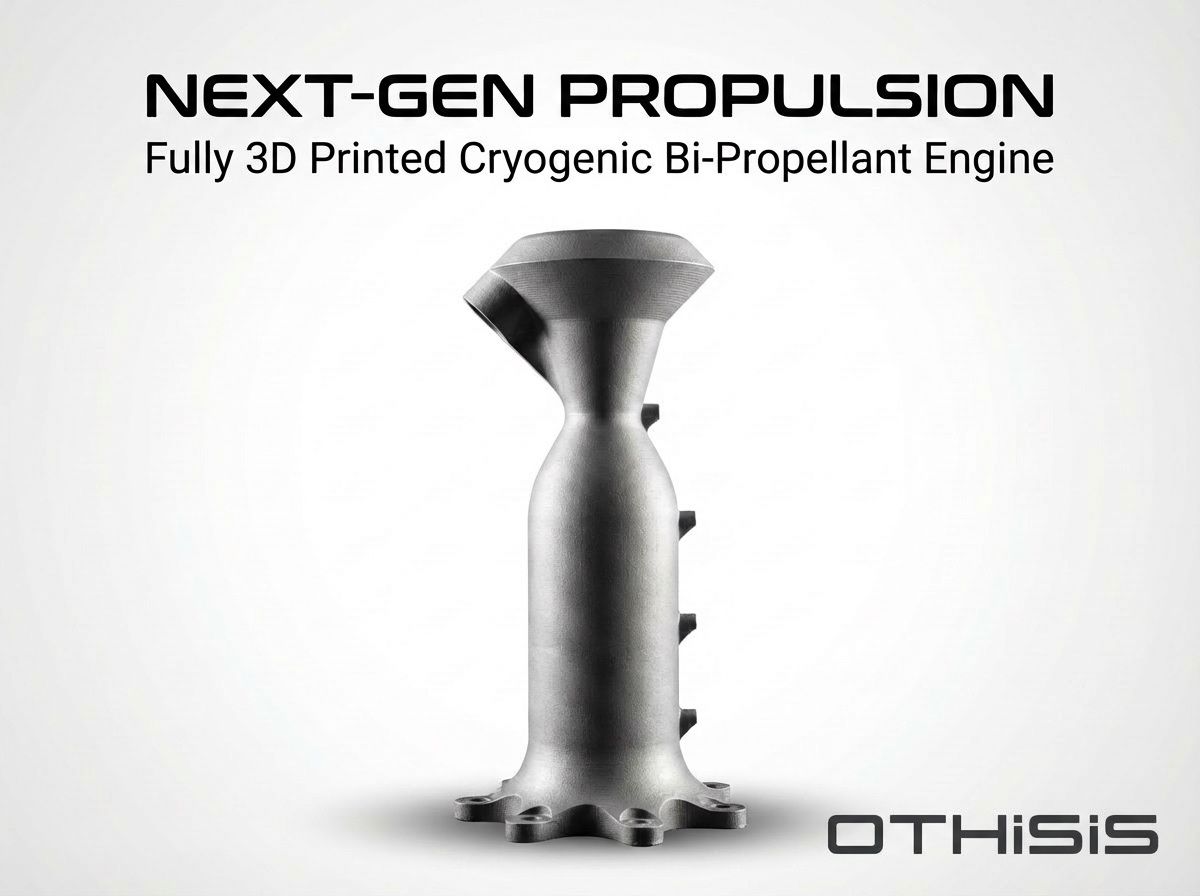
Rocket engine के अंदर कुछ सबसे कठिन engineering problems दिखाई भी नहीं देतीं। Combustion chamber के भीतर बेहद ऊंचा तापमान होता है, propellants को सही मात्रा और सही समय पर मिलाना पड़ता है और chamber की दीवारों को लगातार इस heat से बचाना पड़ता है। अगर इसी engine को भविष्य में बार-बार उड़ाना और फिर जमीन पर सुरक्षित उतारना हो, तो चुनौती और बढ़ जाती है।
Bengaluru-based space startup Othisis Systems ने इसी problem को एक अलग manufacturing approach के साथ tackle करने की कोशिश की है। कंपनी ने Selective Laser Melting यानी SLM 3D printing से तैयार fully cryogenic rocket engine का hot-fire test किया है। Startup के अनुसार यह engine reusable vertical-takeoff-and-vertical-landing rocket के लिए विकसित किया जा रहा है।
Engine का design liquid oxygen यानी LOX और methane को propellants के रूप में इस्तेमाल करता है। इसका nominal thrust लगभग 5 kN है और design total impulse 100 kN·s बताया गया है। हालिया test update में Othisis ने करीब 4.5 kN thrust हासिल करने की जानकारी दी, इसलिए 5 kN को prototype की nominal/design class के रूप में समझना ज्यादा सही है, न कि यह मान लेना कि हर test में exactly 5 kN मिला।
3D printed cryogenic rocket engine क्या है?
नाम सुनकर लग सकता है कि यह किसी सामान्य plastic 3D printer से निकला हुआ rocket engine है। असल में ऐसा नहीं है। यहां additive manufacturing की industrial metal printing technology का इस्तेमाल किया गया है।
SLM में बहुत बारीक metal powder की एक पतली layer बिछाई जाती है। High-energy laser उस layer के चुने हुए हिस्सों को melt करके solid metal बनाता है। फिर अगली powder layer आती है और यही प्रक्रिया बार-बार दोहराई जाती है। इस तरह computer-designed geometry धीरे-धीरे एक वास्तविक metal component में बदलती है।
इस approach की खासियत यह है कि printer उन internal geometries को भी बना सकता है जिन्हें conventional machining से बनाना कठिन, महंगा या कई अलग-अलग parts को जोड़ने वाला काम बन सकता है। Rocket engine में यही capability खास तौर पर cooling channels और complex internal passages के लिए उपयोगी हो सकती है।
Rocket engine को 3D print करने से क्या फायदा मिलता है?
Traditional manufacturing में किसी complex engine component को बनाने के लिए machining, drilling, welding, brazing और assembly जैसे कई steps की जरूरत पड़ सकती है। कुछ internal channels तो ऐसे होते हैं जिन्हें finished solid component के अंदर बाद में आसानी से बनाया ही नहीं जा सकता।
3D printing design freedom को बढ़ाती है। Engineer computer model में complex passages design कर सकता है और metal printer उन्हें layer-by-layer बना सकता है। इससे कुछ components को कम parts में बनाने और assembly points घटाने की संभावना बनती है।
Othisis ने अपने engine को fully additively manufactured approach के रूप में पेश किया है और company के अनुसार इससे development cycle तेज करने और manufacturing complexity कम करने का लक्ष्य है।
लेकिन इसका अर्थ यह नहीं कि 3D printing अपने आप rocket engine को सस्ता और reliable बना देती है। Aerospace-grade metal printing में powder quality, laser parameters, thermal stresses, post-processing, surface finish और inspection बेहद महत्वपूर्ण होते हैं। इसलिए printer से part निकलना केवल manufacturing process की शुरुआत है।
Cryogenic engine आखिर होता क्या है?
Cryogenic का मतलब बहुत कम तापमान से जुड़ा है। Rocket propulsion में cryogenic propellants ऐसे fuels या oxidizers होते हैं जिन्हें liquid state में रखने के लिए अत्यंत कम temperature चाहिए। Othisis का prototype liquid oxygen और liquid methane यानी LOX-methane combination इस्तेमाल करता है।
Liquid oxygen fuel नहीं, बल्कि oxidizer है। Rocket engine को combustion के लिए oxygen की जरूरत होती है, लेकिन अंतरिक्ष में atmospheric oxygen उपलब्ध नहीं होती। इसलिए rocket अपने साथ oxidizer लेकर चलता है। Methane यहां fuel की भूमिका निभाता है। दोनों combustion chamber में पहुंचते हैं, जहां reaction से high-temperature, high-pressure gases बनती हैं और nozzle के जरिए तेजी से बाहर निकलकर thrust पैदा करती हैं।
एक सरल analogy में इसे ऐसे समझ सकते हैं: rocket अपने साथ “ईंधन” और “ईंधन जलाने के लिए oxygen” दोनों लेकर चलता है। इसी वजह से वह vacuum में भी काम कर सकता है।
LOX और Methane का combination क्यों चुना गया?
Methane-based propulsion को reusable rockets के लिए काफी interest मिला है। इसका एक कारण यह है कि methane, kerosene-based fuels की तुलना में comparatively clean-burning fuel हो सकता है और combustion में soot या coking की समस्या कुछ designs में कम हो सकती है। इससे engine inspection और refurbishment को सरल बनाने की संभावना बनती है, हालांकि actual maintenance requirements पूरे engine design पर निर्भर करती हैं।
दूसरी तरफ methane की density kerosene से कम है, इसलिए समान mass के लिए tanks को अलग तरीके से design करना पड़ सकता है। Cryogenic storage भी आसान नहीं है क्योंकि methane और oxygen को बहुत कम temperatures पर liquid रखना पड़ता है।
इसलिए LOX-methane कोई magic fuel combination नहीं है। यह performance, storage, tank design, combustion और reusability के बीच एक engineering trade-off है।
Regenerative Cooling engine को जलने से कैसे बचाती है?
Rocket engine में combustion chamber के अंदर तापमान इतना अधिक हो सकता है कि केवल chamber wall को मजबूत metal से बना देना पर्याप्त नहीं होता। उसे actively cool करना पड़ता है।
Othisis engine में regenerative cooling का इस्तेमाल किया गया है। इसमें propellant को combustion chamber के आसपास बनाए गए छोटे channels से गुजारा जाता है। Propellant chamber wall से heat absorb करता है और फिर combustion process में जाने से पहले preheated condition में पहुंचता है।
यही वह जगह है जहां 3D printing और rocket propulsion एक-दूसरे से सीधे जुड़ते हैं। Cooling channels को chamber wall की geometry के भीतर integrate करना conventional manufacturing से कठिन हो सकता है, जबकि additive manufacturing complex internal passages बनाने की सुविधा देती है।
अर्थात printer का फायदा केवल “engine जल्दी बन गया” नहीं है। असली लाभ यह हो सकता है कि engineer ऐसा cooling architecture बना पाए जो traditional manufacturing में practical न हो।
Pintle Injector क्या करता है?
Engine का एक और महत्वपूर्ण component injector होता है। इसका काम fuel और oxidizer को combustion chamber में इस तरह introduce करना है कि mixing और combustion controlled तरीके से हो।
Othisis ने modular pintle injector architecture इस्तेमाल किया है। उपलब्ध technical reporting के अनुसार इस design में injector का एक component बदलकर अलग thrust ranges के लिए platform को adapt करने का लक्ष्य रखा गया है।
इसका फायदा development में हो सकता है। अगर पूरी combustion chamber को हर thrust class के लिए फिर से design करने के बजाय कुछ modular components बदले जा सकें, तो testing और iteration तेज हो सकती है। लेकिन यह capability अभी development programme का हिस्सा है; इसे बड़े operational rocket पर सिद्ध हो चुका commercial feature मानना जल्दबाजी होगी।
5 kN thrust कितना होता है?
5 kN को लगभग 5,000 newtons thrust समझा जा सकता है। पृथ्वी की सतह पर यह roughly 500 किलोग्राम-force के आसपास बैठता है। लेकिन rocket performance को केवल thrust देखकर judge नहीं किया जाता। Vehicle का total mass, propellant mass, burn time, nozzle design, chamber pressure और specific impulse जैसे parameters भी महत्वपूर्ण हैं।
इस prototype का उद्देश्य किसी बड़े orbital launcher को अकेले उठाना नहीं है। Othisis इसे एक छोटे VTVL यानी Vertical Takeoff, Vertical Landing reusable hopper vehicle के propulsion system के रूप में विकसित कर रहा है।
यह “hopper” approach rocket technology को पहले छोटे और controlled flight environment में test करने का एक तरीका हो सकता है। Rocket vertical launch करेगा, manoeuvre करेगा और फिर propulsion की मदद से landing की कोशिश करेगा। यही reusable launch technology की core challenge है।
Reusable rocket के लिए engine इतना महत्वपूर्ण क्यों है?
अगर rocket केवल एक बार उड़ता है, तो engine की lifetime requirement अलग होती है। लेकिन reusable rocket को launch के बाद वापस आना है और फिर अगली flight के लिए तैयार होना है। इसका मतलब engine को सिर्फ high thrust पैदा नहीं करना; उसे thermal cycles, vibration, pressure और repeated starts को भी सहना पड़ सकता है।
यहीं reusability का असली engineering test शुरू होता है। एक successful static fire यह साबित करता है कि engine ने ground test environment में combustion किया और desired behaviour दिखाया। लेकिन इससे यह अपने आप साबित नहीं होता कि engine कई flights तक reusable है। उसके लिए repeated hot-fire tests, inspections और eventually flight testing की जरूरत होगी।
Othisis खुद अपने long-term objective को fully reusable rocket के रूप में describe करता है। कंपनी की website पर current development focus cryogenic bi-propellant liquid rocket engine पर दिया गया है।
Othisis ने इस test तक पहुंचने में क्या किया?
इस milestone के पीछे केवल engine fabrication नहीं था। Startup ने Bengaluru में अपना rocket-engine test facility भी विकसित किया। Othisis के अनुसार facility में test infrastructure, electronics और control systems को छोटे team setup में विकसित किया गया।
Recent reporting के मुताबिक successful sustained burn से पहले team ने 20 से ज्यादा test cycles और तीन failed ignition attempts देखे। यह detail खास तौर पर महत्वपूर्ण है क्योंकि rocket development में failure अक्सर engineering iteration का हिस्सा होता है।
एक failed ignition का मतलब यह नहीं कि पूरी technology बेकार है। Propellant flow, ignition timing, valve response, control logic या combustion stability में छोटी समस्या भी test failure पैदा कर सकती है। हर test से मिलने वाला data अगले iteration में design सुधारने में काम आता है।
3D printing rocket development को तेज कैसे कर सकती है?
Rocket startup के लिए development speed बहुत महत्वपूर्ण है। Traditional manufacturing में नया design बनाने, machine करने और assemble करने में काफी समय लग सकता है। अगर engineer को cooling channel, injector geometry या chamber dimensions बदलने हों, तो कई manufacturing steps फिर से करने पड़ सकते हैं।
Additive manufacturing में digital design बदलकर नया component comparatively जल्दी produce किया जा सकता है। यही rapid iteration startup को अधिक design-test-redesign cycles करने का अवसर देती है।
Othisis का model इसी philosophy से जुड़ा दिखाई देता है। Company ने अपनी journey को student-led rocketry community से private aerospace company तक बढ़ाया है और अपने projects में high-powered rockets, flight computer और propulsion development का क्रम दिखाया है।
लेकिन 3D printing की अपनी सीमाएं भी हैं
3D printed rocket engine सुनने में futuristic लगता है, लेकिन aerospace में printed metal part को flight-ready बनाना आसान नहीं है। Layer-by-layer manufacturing में microscopic defects, residual stresses और surface roughness जैसी समस्याएं हो सकती हैं।
Internal cooling channels की geometry जितनी complex होगी, inspection उतना कठिन हो सकता है। इसके अलावा printed component को heat treatment, machining या surface finishing जैसे post-processing steps की जरूरत पड़ सकती है।
इसलिए “3D printed” का अर्थ “बिना machining या quality control के तैयार” नहीं है। वास्तव में aerospace additive manufacturing में manufacturing process और inspection technology दोनों साथ विकसित करने पड़ते हैं।
क्या Othisis का engine अभी orbital rocket के लिए तैयार है?
नहीं, अभी ऐसा कहना जल्दबाजी होगी। यह engine prototype testing stage में है और इसे future reusable VTVL hopper rocket के लिए विकसित किया जा रहा है। Successful hot-fire test एक महत्वपूर्ण milestone है, लेकिन orbital launch vehicle तक पहुंचने के लिए कई और stages बाकी हैं।
आगे vehicle-level testing, propulsion integration, guidance and control, structural validation, flight testing और regulatory requirements जैसी कई engineering challenges आएंगी। Rocket engine का ground test सफल होना और पूरा reusable launch system का operational होना दो अलग milestones हैं।
क्या भारत में private reusable rockets बन रहे हैं?
भारत में private space sector अब केवल satellite manufacturing तक सीमित नहीं रहा। Propulsion, launch vehicles, avionics और reusable systems पर भी private companies काम कर रही हैं। Othisis इसी broader Indian new-space ecosystem का एक छोटा लेकिन interesting example है।
Othisis की own history भी इस बदलाव को दिखाती है। Company के अनुसार इसकी शुरुआत 2023 में rocketry community के रूप में हुई और 2024 में Othisis Systems के रूप में incorporation हुआ।
इससे ज्यादा महत्वपूर्ण बात यह है कि ऐसे startups hardware को relatively small teams और iterative testing के जरिए develop करने की कोशिश कर रहे हैं। Space hardware में यह बदलाव महत्वपूर्ण है क्योंकि software startup की तरह rocket engine को केवल code update करके deploy नहीं किया जा सकता। हर design change को material, manufacturing और physical testing से गुजरना पड़ता है।
भारत के लिए इस innovation का असली महत्व क्या है?
इस innovation का महत्व केवल इस बात में नहीं है कि भारत में एक और rocket engine बन रहा है। असली कहानी manufacturing capability की है।
यदि additive manufacturing से complex propulsion components को तेजी से design और test किया जा सके, तो छोटे space startups के लिए propulsion development का entry barrier कम हो सकता है। इससे domestic supply chains, specialised manufacturing और aerospace engineering skills को भी बढ़ावा मिल सकता है।
दूसरा फायदा design freedom है। Conventional manufacturing की limitations कई बार engineer को उस geometry तक सीमित कर देती हैं जिसे machine और assemble किया जा सके। 3D printing इस constraint को कुछ हद तक बदलती है। Cooling channels, lightweight structures और integrated components जैसे ideas को अधिक practical तरीके से explore किया जा सकता है।
Othisis के लिए अगली बड़ी चुनौती क्या होगी?
अब सबसे महत्वपूर्ण सवाल यह नहीं है कि engine fire कर सकता है या नहीं। अगला सवाल है—क्या यह repeatedly, predictably और flight conditions में काम कर सकता है?
इसके लिए longer-duration hot-fire testing, repeated ignition cycles, thermal inspection और vehicle integration महत्वपूर्ण होंगे। इसके बाद hopper vehicle की flight testing से यह पता चलेगा कि propulsion system वास्तविक ascent, descent और landing manoeuvres में कितना reliable है।
Reusable rocket में landing phase विशेष रूप से demanding होती है क्योंकि engine को throttle और control commands के साथ तेजी से response देना पड़ता है। Vehicle की stability, avionics और guidance system भी propulsion के साथ tightly integrated होते हैं। इसलिए engine की सफलता पूरी reusable system की सफलता के लिए जरूरी है, लेकिन अकेले पर्याप्त नहीं।
इस innovation को लेकर सबसे बड़ा भ्रम क्या हो सकता है?
सबसे बड़ा भ्रम यह होगा कि 3D printing ने rocket engine बनाना आसान कर दिया है। सही बात यह है कि 3D printing ने कुछ कठिन manufacturing problems को अलग तरीके से हल करने का रास्ता दिया है।
Engine की physics वही रहती है—combustion stability, heat transfer, chamber pressure, turbomachinery या propellant handling जैसी समस्याएं गायब नहीं होतीं। 3D printing केवल engineer को उन समस्याओं के लिए अलग geometries और manufacturing possibilities देती है।
इसलिए Othisis की उपलब्धि को “printer ने rocket engine बना दिया” के बजाय “additive manufacturing को advanced propulsion engineering के साथ जोड़कर working prototype तक पहुंचाया गया” के रूप में देखना ज्यादा सही है।
कुल मिलाकर
3D printed cryogenic rocket engine की कहानी असल में तीन technologies के मिलन की कहानी है—additive manufacturing, LOX-methane propulsion और reusable rocket architecture। Bengaluru की Othisis Systems ने SLM 3D printing से तैयार cryogenic engine का hot-fire test करके यह दिखाया है कि एक छोटा Indian space startup complex propulsion hardware को अपने development ecosystem में आगे बढ़ा सकता है।
Engine का लगभग 5 kN nominal thrust और 100 kN·s total impulse class इसे बड़े orbital engine की category में नहीं रखता। इसका लक्ष्य एक reusable VTVL hopper vehicle के लिए propulsion देना है। लेकिन इसी छोटे scale पर technology को test करना महत्वपूर्ण है, क्योंकि reusable rocket की reliability भी छोटे prototypes और repeated ground tests से ही विकसित होती है।
सबसे दिलचस्प बात 3D printing है। Complex cooling channels और integrated geometries को relatively flexible तरीके से बनाने की क्षमता future rocket manufacturing को बदल सकती है। मगर यह बदलाव तभी meaningful होगा जब printed components repeated testing, flight qualification और long-term reusability की कसौटी पर खरे उतरें।
Othisis अभी उस लंबी journey के शुरुआती हिस्से में है। Successful hot-fire test एक milestone है, मंजिल नहीं। अगर आगे का development सफल रहता है, तो यह भारतीय private space sector में उस दिशा का एक अच्छा उदाहरण बन सकता है जहां rocket technology सिर्फ खरीदी या imported components पर निर्भर रहने के बजाय design, manufacturing और testing—तीनों स्तरों पर देश में विकसित की जा रही है।
FAQ
3D printed rocket engine क्या है?
यह ऐसा rocket engine है जिसके metal components additive manufacturing यानी industrial 3D printing से बनाए जाते हैं। Othisis ने Selective Laser Melting technology का इस्तेमाल करके fully cryogenic engine prototype बनाया है।
Othisis का rocket engine किस fuel का इस्तेमाल करता है?
Engine liquid oxygen यानी LOX को oxidizer और liquid methane को fuel के रूप में इस्तेमाल करता है। यह combination reusable rocket propulsion के लिए विकसित किया जा रहा है।
Othisis engine का thrust कितना है?
Prototype को लगभग 5 kN nominal thrust class के लिए design किया गया है। हालिया company update में test के दौरान करीब 4.5 kN thrust की जानकारी दी गई थी। इसलिए 5 kN को design/nominal figure के रूप में समझना चाहिए।
SLM 3D printing rocket engine के लिए क्यों उपयोगी है?
SLM metal powder को laser से layer-by-layer fuse करती है। इससे complex internal geometries, जैसे integrated cooling channels, बनाने की flexibility मिल सकती है और कई manufacturing steps को कम करने की संभावना बनती है।
Regenerative cooling क्या होती है?
इसमें propellant को combustion chamber की walls के आसपास बने channels से प्रवाहित किया जाता है। Propellant chamber से heat absorb करता है और फिर combustion process में जाता है। इससे chamber wall को अत्यधिक तापमान से बचाने में मदद मिलती है।
क्या Othisis का rocket engine reusable है?
Engine को reusable rocket architecture के लिए design किया गया है, लेकिन prototype का successful hot-fire test अपने आप यह साबित नहीं करता कि engine ने multiple flight cycles की operational reusability हासिल कर ली है। इसके लिए आगे repeated testing और flight qualification जरूरी होगी।
क्या Othisis का rocket अभी space में जा चुका है?
नहीं। उपलब्ध जानकारी के अनुसार tested engine future VTVL hopper rocket के लिए विकसित किया जा रहा है। Engine का ground hot-fire test एक महत्वपूर्ण propulsion milestone है, लेकिन orbital flight उससे आगे की development stage होगी।